Hiking Costa Rica’s Turrialba Volcano: A Student Adventure Above the Clouds
For student groups visiting Costa Rica, few experiences combine adventure, science, and breathtaking views quite like hiking the slopes of the Turrialba Volcano.
Located above the town of Turrialba, this active volcano offers students the chance to explore a real volcanic landscape while learning about geology, ecosystems, and Costa Rica’s powerful natural forces.
At nearly 3,352 meters (10,958 feet), Turrialba is the second-highest volcano in Costa Rica, rising dramatically above farms, forests, and valleys.
For student travelers, the hike is more than a physical challenge. It is an outdoor classroom.
A Volcano Shaped by Powerful Forces
Turrialba is a stratovolcano, the type formed by layers of lava, ash, and volcanic rock built up over thousands of years.
Interestingly, it shares the same underground magma system as the nearby Irazú Volcano, one of Costa Rica’s most famous peaks.
Although major eruptions are rare, the volcano often releases steam and volcanic gases from its craters, giving students a glimpse into the ongoing geological activity beneath the Earth’s surface.
For many visiting groups, seeing a volcanic crater up close is a memorable way to connect science lessons with real-world landscapes.
The Journey to the Trailhead
The hike begins with a drive from the town of Turrialba to the mountain’s upper slopes.
It is only about 15 miles, but mountain roads mean the trip takes roughly 45–50 minutes. The route winds through farmland, small communities, and misty cloud forest as you climb toward the volcano.
For students, this drive is part of the experience. Along the way guides often discuss:
- Local agriculture and dairy farms
- How volcanic soils support farming
- The geography of Costa Rica’s volcanic mountain range
By the time groups reach the trailhead, they are already learning about the landscape surrounding them.
The Hike Up the Volcano
Unlike some of Costa Rica’s volcanoes that allow visitors to drive almost to the crater, Turrialba requires a real hike.
Students begin the climb from a private farm entrance before crossing open pastureland and entering the protected volcanic area.
The trail gradually becomes steeper as hikers move onto loose volcanic gravel and exposed slopes.
Along the way students experience:
- Expansive views of the Turrialba Valley
- Unique high-altitude vegetation
- Dramatic volcanic terrain shaped by past eruptions
Reaching the upper slopes provides a rare perspective: looking down into one of Costa Rica’s most impressive volcanic craters.
Why Early Morning Matters
Weather on tropical volcanoes changes quickly.
The best time to hike Turrialba is early in the morning, often with departures before sunrise.
There are two reasons for this:
- Clearer skies – clouds tend to roll in later in the day
- Better hiking conditions – cooler temperatures make the climb easier
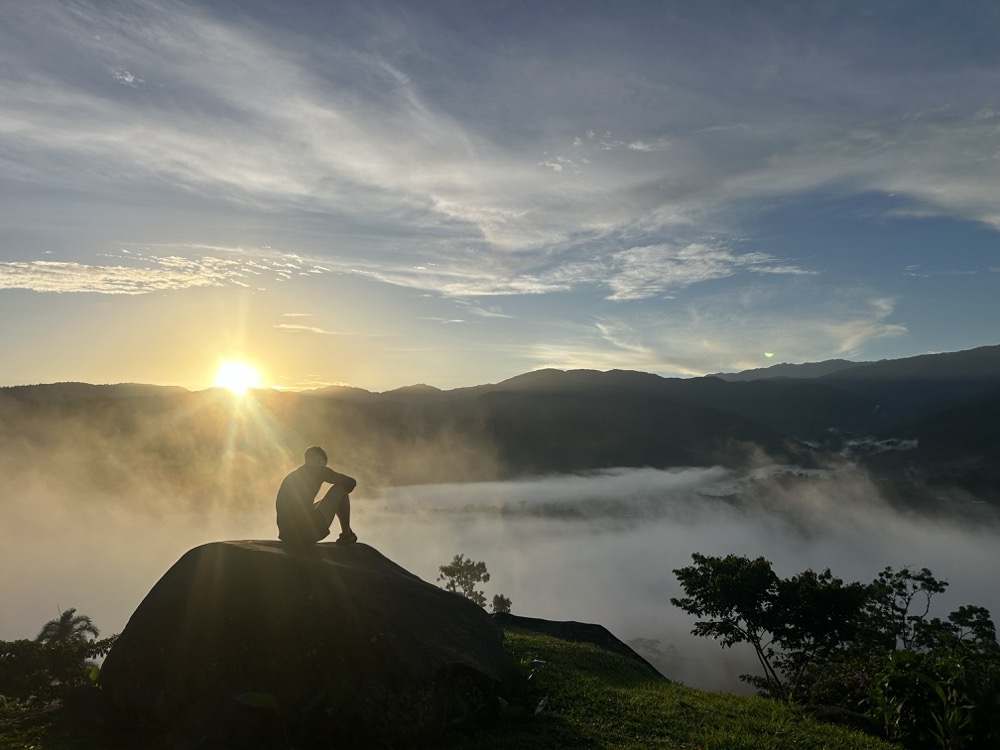
For student groups, the early start often becomes part of the adventure. Watching the sun rise above the mountains of Costa Rica is a highlight many students remember long after the trip.
What Students Should Bring
Because the hike takes place at high elevation, preparation is important.
Recommended items include:
- Comfortable hiking shoes or boots
- Water and snacks
- Sunscreen and sunglasses
- Rain jacket or light jacket
- Small backpack
- Walking sticks (optional but helpful)
Temperatures near the summit are much cooler than in the lowlands, and clouds or wind can make conditions feel even colder.
Learning Opportunities on the Volcano
A hike up Turrialba is not only an adventure activity. It also provides opportunities for students to learn about:
Geology
How volcanoes form and how magma moves beneath the Earth’s crust.
Ecology
How plants and animals adapt to high elevations and volcanic soils.
Environmental science
How Costa Rica manages protected areas and monitors volcanic activity.
For teachers, the volcano becomes a living field study site.
An Adventure Students Never Forget
Costa Rica is famous for its rainforests, rivers, and wildlife. But climbing a volcano adds another dimension to the experience.
Standing on the slopes of Turrialba, students see firsthand how powerful geological forces have shaped the landscapes of Central America.
It is challenging.
It is educational.
And it is one of the most memorable outdoor experiences a student group can have in Costa Rica.