An introduction to the Camino de Sitio Mata
A field trip your students will actually remember
Most school trips follow the same pattern. You visit a place, someone explains what you’re looking at, you take a photo, and you move on. Students are observers. Passive ones.
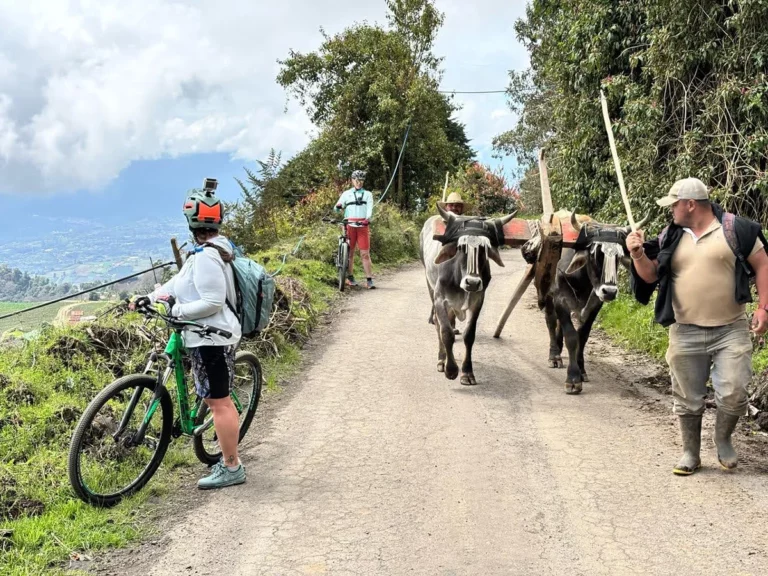
El Camino de Sitio de Mata is different. It’s a walking experience through a small farming community just outside Turrialba, Costa Rica — and the whole point is that students don’t observe Costa Rican culture. They step inside it.
What actually happens
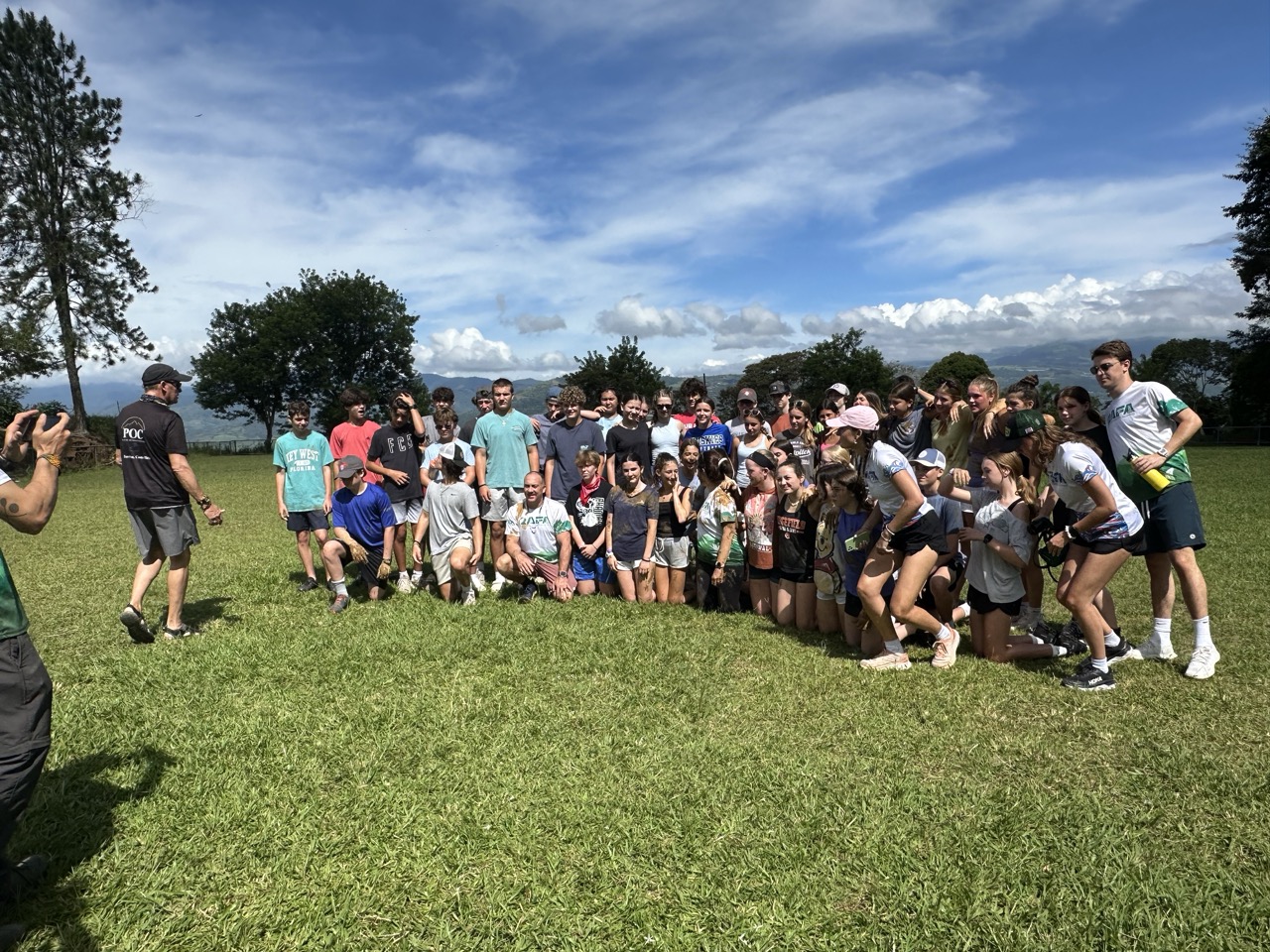
The experience runs across eight stops through the village of Sitio de Mata. At each stop, students knock on a real door, meet the person who lives there, and learn one word of Costa Rican slang — pachuco, the playful street Spanish that makes Costa Rica sound like nowhere else. By the end of the day they’ve collected eight words, each one tied to a place, a person, and a story they won’t forget.
Each student carries a Walker’s Passport — a small booklet they stamp at every home. It’s a simple thing, but it gives the day a structure students can hold onto.
The eight stops
Stop 1 — The Welcome: ¡Tuanis! The first door belongs to Adela, and before students even sit down there’s a cafecito being poured. In Costa Rica, coffee arrives before your name does — it’s how Ticos say you are welcome in my home without words. Students learn their first slang word here: tuanis (cool, awesome, the good stuff), a term with a surprisingly sneaky origin. It comes from a 19th-century military cipher that scrambled letters — the word buenos run through the code came out as tuanis. A secret soldiers’ word for “good,” still on the lips of kids in Turrialba two hundred years later.
Stop 2 — The Village Store: Mae Oscar’s pulpería is the nervous system of Sitio de Mata. It’s where the town buys eggs, settles gossip, and runs tabs on credit — neighbors buy fiado, written in a notebook, paid when the harvest comes in. No contract, just a name and a handshake. Students buy a single piece of candy the way locals do, and learn mae — the Costa Rican equivalent of “dude,” used more than Americans use “dude,” “bro,” and “man” combined. They also learn when not to use it: never with an elder, a stranger, or someone’s boss. Respect lives in who you say it to.
Stop 3 — Gratitude: ¡Qué dicha! At Marta’s house students learn the quiet engine behind Costa Rica’s reputation as one of the happiest countries on earth: a reflex of gratitude. Qué dicha means “how lucky” or “how wonderful” — Ticos reach for it constantly, the way other cultures say “fine.” Students learn that Costa Rica abolished its military in 1948 and redirected that spending into schools and healthcare. A people that chose teachers over tanks tends to count its blessings out loud.
Stop 4 — The Tico Shrug: ¡Diay! Casa Mariam is where students learn the most useful word on the trail. Diay is the all-purpose Costa Rican interjection — surprise, confusion, acceptance, “so anyway,” and a philosophical little shrug at whatever life just did, all in two syllables. It’s a worn-down version of “and from there” — and tone is everything. Said bright and rising, it means whoa, what happened? Said soft and falling, it means well… that’s just how it is. Students learn something real about how a culture handles uncertainty and avoids confrontation without dismissing it.
Stop 5 — The Surprising Remedy: ¡Upe! There’s no doorbell at Flor’s gate — you announce yourself by calling ¡Upe! It may be one of the oldest words students learn all day, possibly descended from Huetar, the indigenous language once spoken across this part of Costa Rica. Inside, Flor shares a folk remedy for trapped water in the ear that startles every group — one with roots in Bribri indigenous healing traditions, where tobacco is sacred medicine. Students learn about the Bribri and Cabécar peoples of the Talamanca mountains, their healers, and a medical tradition that’s been alive in these hills for centuries. It’s shared as living folklore and cultural heritage, not medical advice — but it’s the kind of thing students are still talking about on the bus home.
Stop 6 — Pura Vida: ¡Pura vida! At Tita’s house the Camino gets loud. Every Costa Rican village has two things — a church and a soccer field — and at the cancha, the whole town is one family. Students paint their faces azul, blanco y rojo and learn to cheer for La Sele, the national team. They hear the story of the 2014 World Cup, when tiny Costa Rica — a country of under five million people — was drawn into the “Group of Death” alongside Uruguay, Italy, and England, and beat them all. They also learn the story behind pura vida itself: the phrase that means hello, goodbye, thank you, you’re welcome, and a whole way of moving through the world, all at once.
Stop 7 — 101 Years of Life: ¡Cachete! This stop only happens when Doña Blanca is feeling well — and when it does, it tends to be the one students remember most. She is 101 years old. She has watched electricity, the telephone, the television, and the internet arrive at this mountain, one by one. Ask her the secret to a long life and she gives it plainly: work hard, eat clean, laugh often, hold no grudges. Students learn about the Blue Zones — the five places on earth where people live the longest — and why researchers believe genes account for only about 20% of longevity. The other 80% is the life you build.
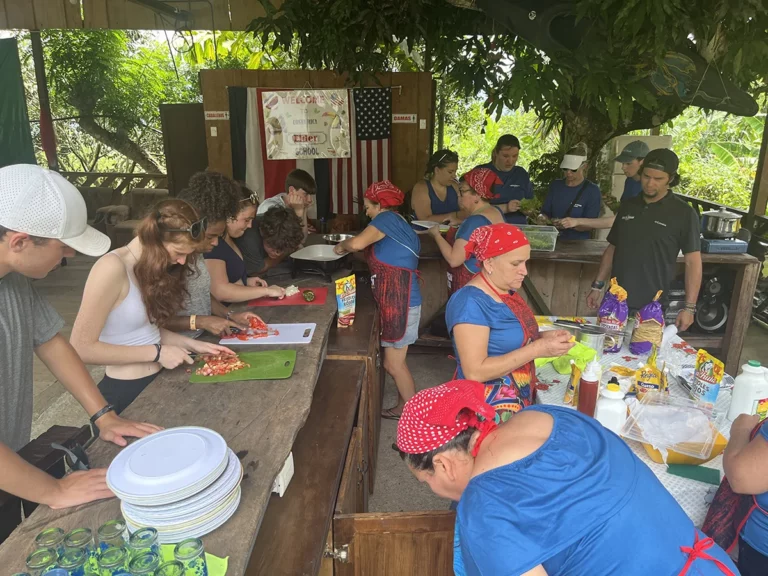
Stop 8 — The Farewell Feast: ¡Zarpe! The Camino ends where everything in Tico culture begins: in the kitchen. The mamas of Sitio de Mata cook traditional recipes with students — gallo pinto, casado, hand-pressed tortillas — dishes with roots that go back a thousand years to the same valley. Students learn that zarpe means “the last one,” the farewell toast before you set sail. Then they raise a cup to Sitio de Mata, to the families who opened their doors, and to the eight words now living in their mouths.
Why it works for high schoolers
High school students tune out lectures. They don’t tune out a 101-year-old woman telling them her secret to life, or a pulpería owner showing them the notebook where neighbors buy groceries on trust. The format keeps them engaged without feeling like school. Each slang word gives them something concrete to hold onto and use. By the third or fourth stop, students are shouting ¡upe! at gates and saying ¡qué dicha! when something goes right. They’re not repeating sounds — they’re being let in on the joke.
For Spanish students specifically, it’s a chance to hear and use the language the way people actually speak it, in the places where it lives. For everyone else, it’s a window into history, culture, indigenous heritage, public health, and what it actually means to build a good life — covered in a single day’s walk.
Where we are
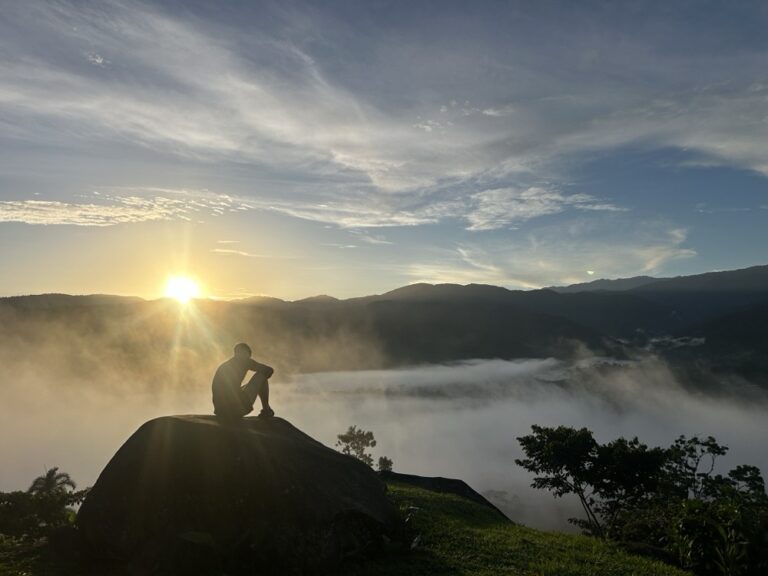
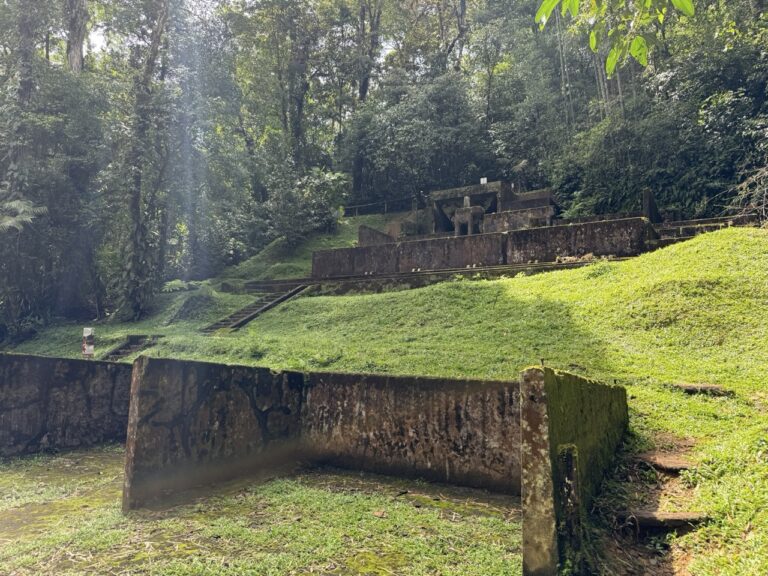
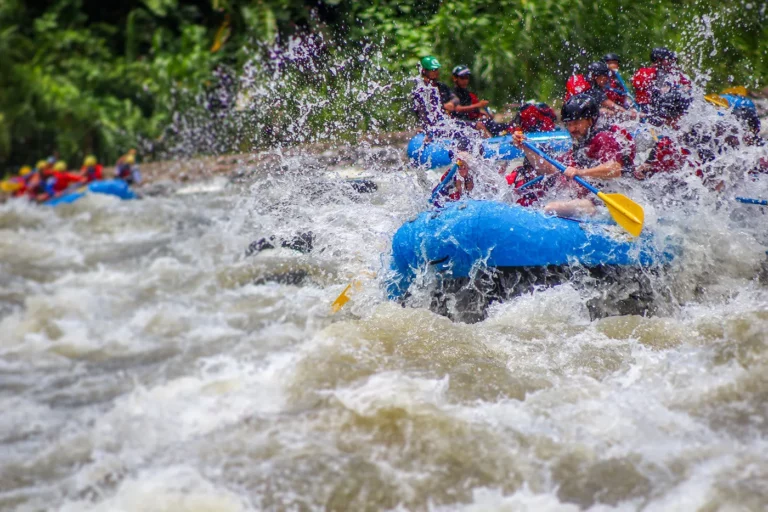
Sitio de Mata is a small farming community in the Turrialba canton, about two hours from San José. The region sits in the shadow of an active volcano, above two of the best whitewater rivers in the Americas, and 17 kilometers from Guayabo — the largest pre-Columbian site in Costa Rica, a city of up to 10,000 people whose aqueducts still carry water a thousand years later. It’s a remarkable corner of the country that most tourists never see.
Global Trails is based here. We built the Camino de Sitio de Mata because the richest experiences for students aren’t in museums or on guided bus tours. They’re in living rooms, at kitchen tables, and in doorways where someone says mi casa, su casa — and means it.
Get in touch
If you’re planning a Costa Rica trip and want your students to come home with more than a tan and a souvenir, we’d love to talk. Reach out to us at Global Trails to learn more about scheduling and logistics.